

You finally typed "The End" and immediately Googled whether your manuscript is a novel or an expensive doorstop. Smart move. The average word count for a novel sits between 70,000 and 100,000 words — but "it depends on your genre" is the actual answer, and agents will reject you faster than a bad Tinder bio if you miss the target. Let's fix that.
The Goldilocks Problem: Too Long, Too Short, Just Rejected
Literary agents read query letters all day. A 200,000-word debut fantasy from an unknown author signals one thing: "I couldn't edit myself." A 35,000-word "novel" signals another: "This is a novella wearing a trench coat."
Word count affects printing costs, shelf pricing, and reader expectations. Get it wrong and you don't even make it to the manuscript stage.
The Universal Benchmarks Every Debut Author Needs
The 80,000-word target is your safest bet across most genres. It's long enough to feel substantial, short enough to not terrify an agent's intern.
- Minimum novel threshold: 40,000–50,000 words (per NaNoWriMo and SFWA Nebula Award definitions)
- Sweet spot for debut fiction: 70,000–100,000 words
- Danger zone: Exceeding 100,000 words as a first-time author raises red flags unless your genre explicitly allows it
Paste your draft into the Word & Character Counter right now to see where you stand before reading another word of this guide.
Genre-by-Genre Word Count Breakdown
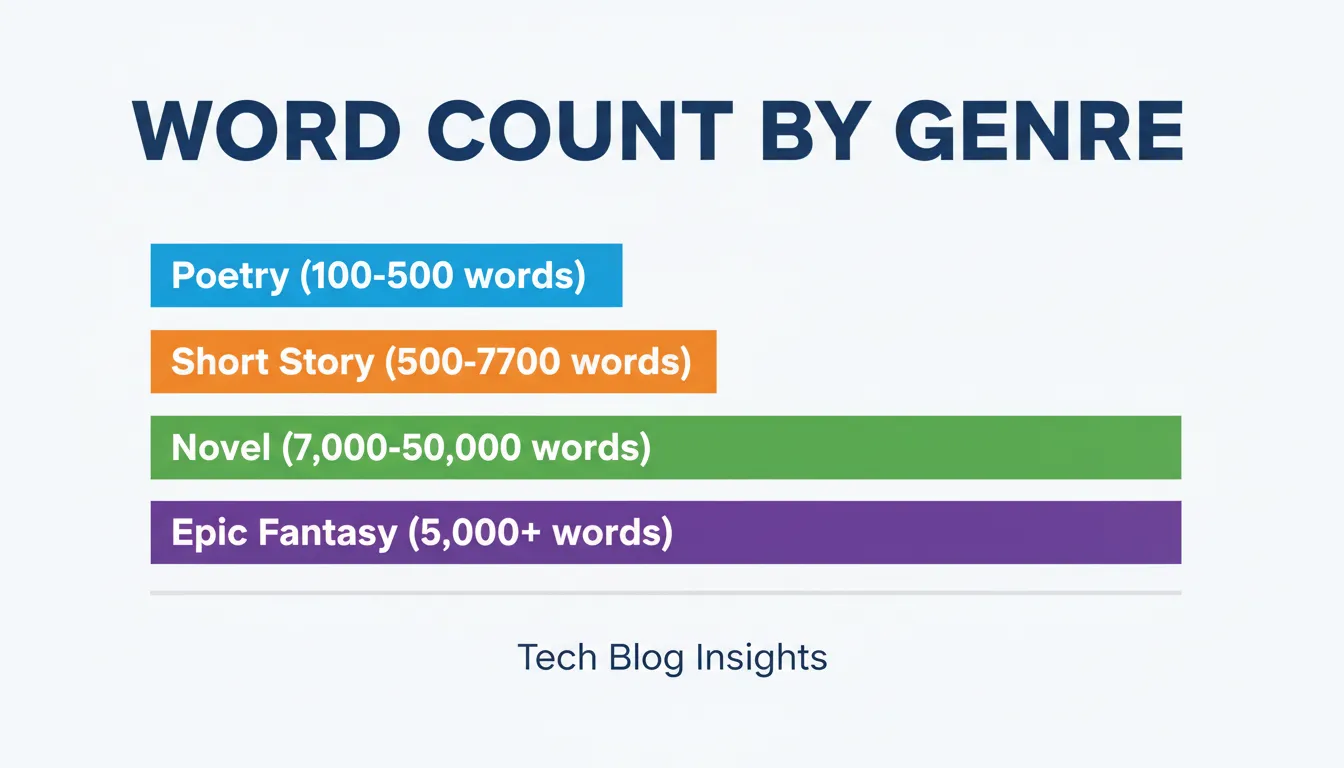
Fantasy and Science Fiction
Fantasy gets the most generous word budget because world-building takes space. The accepted range is 100,000–150,000 words, with the 2024 median sitting around 87,100 (automateed.com). Epic fantasy targets 90,000–120,000 per current agent guidelines.
Science Fiction is leaner. The accepted range runs 70,000–120,000 words, though exact median figures vary by source and year — treat any specific year-over-year comparisons you see online with skepticism.
Mystery, Thriller, and Crime
These genres live and die by pacing, so bloat is punished hard. Target 80,000–100,000 words. Fast-paced crime novels increasingly land closer to 70,000. The 2024 mystery/thriller median is approximately 78,500 words (automateed.com). The Girl on the Train clocked in at over 100,000 — so yes, you can go long if the tension earns it.
Romance
Romance is refreshingly consistent: 70,000–90,000 words, with a 2024 median holding steady at 75,000. Category romance (think Harlequin series) runs shorter, sometimes 50,000–60,000, because readers buy them in bulk and want a quick emotional hit.
Horror
The target range is 80,000–100,000 words. However, published horror medians run lower than that in practice. Stephen King's Misery hit 105,000, but plenty of successful horror titles land well below 80,000. Write scary first, count words second.
Literary and Historical Fiction
Historical fiction earns the longest runway: 90,000–120,000 words, sometimes more for sprawling epics. Literary fiction is actually leaner than people expect, with a 2024 median around 66,300 words. Beautiful sentences don't require more of them.
Young Adult and Middle Grade: Different Rules Entirely
YA targets 50,000–80,000 words. YA Fantasy gets an exception, pushing up to 100,000 (sometimes 150,000 for established authors). The Hunger Games ran approximately 99,750 words. The Perks of Being a Wallflower hit 60,438. Both worked. Genre matters more than raw count.
Middle Grade breaks into tiers:
- Lower MG: 20,000–30,000 words
- Standard MG: 30,000–45,000 words
- Upper MG: 45,000–55,000 words
Pages, Thickness, and the "Does It Look Like a Real Book?" Test
The industry standard is 250–300 words per page for a printed manuscript. An 80,000-word manuscript equals roughly 260–320 pages. Want to know what percentage of your target you've hit? The Percentage Calculator handles that math instantly — useful for tracking your Act 1 ending at the 25% mark too.
Final printed book thickness depends on paper stock, but 80,000 words typically produces a spine wide enough to read on a shelf. Anything under 50,000 starts looking suspiciously thin.
Traditional Publishing vs. Self-Publishing: The Rules Change
Traditional publishing is strict. Debut authors who submit outside genre norms get passed over, full stop. No exceptions for "my story needed the space."
Self-publishing flips this. Amazon KDP lets you publish a 50,000-word "short novel" or a 200,000-word epic. Kindle Unlimited pays per page read (KENP rate), so longer books can actually earn more — if readers finish them. Know your niche audience before you decide to write a doorstop.
When submitting manuscripts, format chapter titles consistently using the Case Converter to switch between Title Case and UPPERCASE for professional presentation.
Fix Your Word Count Before You Query
Too long (bloated manuscript): Identify subplots that don't directly affect your protagonist's main arc. Cut them or compress them into single scenes. Trim adverbs. Merge minor characters.
Too short (thin manuscript): Add character internalization after key scenes. Expand sensory details in your setting. Deepen the emotional consequence of each plot beat.
Use a Word & Character Counter to audit individual chapter lengths — uneven chapters often signal pacing problems before your beta readers even mention it.
The honest advice: Write the best story you can first. Then edit to meet industry standards. Chasing word count before your story works is like buying a frame before you paint the picture.
Frequently Asked Questions
Q: What is the industry standard word count for a debut novel in my specific genre? Most debut novels should target 70,000–100,000 words. Fantasy allows up to 120,000; romance sits at 70,000–90,000; YA targets 50,000–80,000. Check the genre breakdown above for your specific category.
Q: How many pages will my 80,000-word manuscript actually be when printed? Divide your word count by 250–300 words per page. An 80,000-word manuscript produces approximately 260–320 manuscript pages, and a printed book of roughly 280–300 pages depending on trim size and font.
Q: Is my manuscript too short to be considered a novel? Below 40,000 words, you have a novella by most industry definitions. Between 40,000 and 50,000, you're in a gray zone. Most traditional publishers want at least 70,000 words for adult fiction.
Q: How do word count requirements change for self-publishing vs. traditional publishing? Traditional publishing enforces genre norms strictly for debut authors. Self-publishing gives you full freedom, but Kindle Unlimited's per-page payment model means length directly affects earnings — longer books that readers finish pay more.
Q: Are there free browser tools to calculate reading time or estimate final book thickness? Yes. The Word & Character Counter estimates reading time instantly alongside your word count, no signup needed. It works in-browser and takes about three seconds to use.