
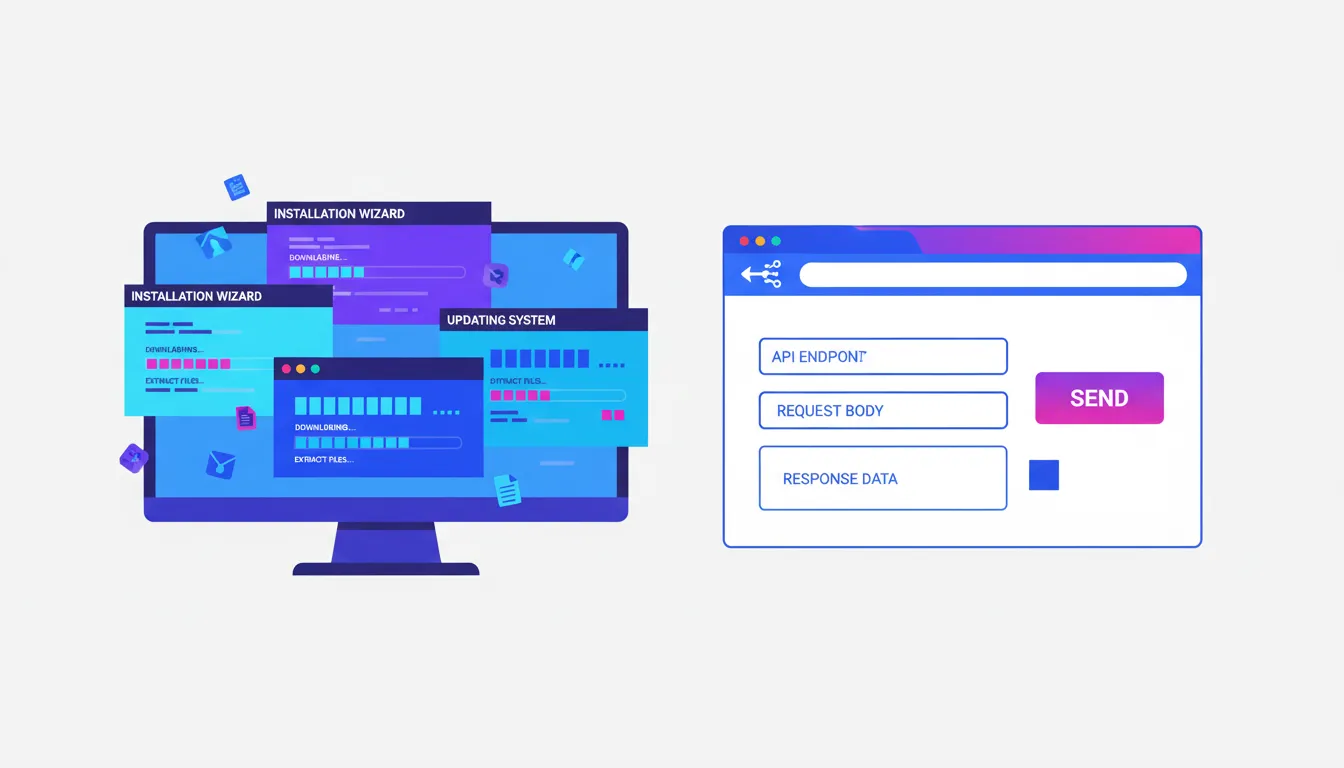
You want to test an API. You Google "free online api testing tools." Postman tells you to create an account. Your IT department says you can't install anything. Your laptop fans start spinning like a helicopter. Sound familiar? Welcome to 2026, where browser-native tools have made all of that suffering completely optional.
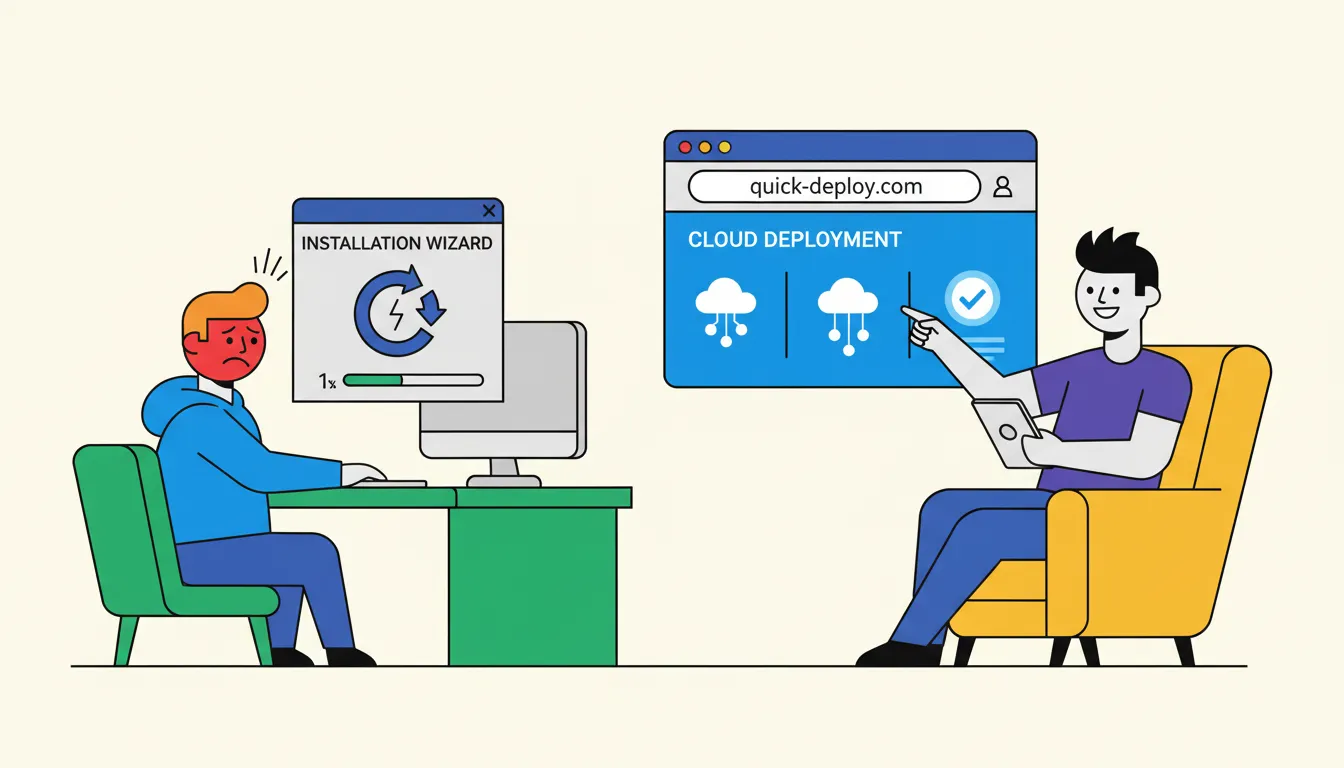
Junior developers are abandoning desktop-first tools faster than startups abandon their original business models. The winner? Hoppscotch, the open-source, browser-based API client that asks for nothing except a URL and your curiosity.
Why "Just Open a Tab" Beats "Download the Installer"
Corporate laptops with admin-only installation policies are basically fancy paperweights for developers who need to test endpoints quickly. Browser-based tools skip that entire bureaucratic comedy show.
Hoppscotch runs entirely in your browser. No Electron wrapper, no 400MB download, no "restart required." Native browser engines in 2026 are genuinely faster than Electron-based desktop apps, which are essentially Chrome wearing a trench coat and pretending to be a desktop application.
You paste a URL, hit Send, and get a response. That's it. No onboarding wizard. No "complete your profile" popup.
Hoppscotch vs. Postman: The Login Wall Problem
Postman used to be the undisputed king. Then it decided everyone needed an account to do anything useful, and junior developers collectively said "no thank you" and left.
Hoppscotch matches Postman on the features that actually matter: environment variables, request collections, history, and authentication methods including Bearer Token, OAuth2, and Basic Auth. What it skips is the bloat, the paywalls, and the existential dread.
For freelancers worried about data ownership, Hoppscotch's open-source architecture means your API keys and request history stay in your browser's local storage, not on someone else's server.
AI Features for People Who Don't Speak "Developer"
Here’s where 2026 gets weird. Modern API tools are slapping AI layers on everything to translate plain English into actual requests. Describe the data you need, and the tool builds the request for you.
For non-technical folks building AI agent workflows, this is actually a godsend. Instead of writing Python scripts, you describe what you want, get a structured JSON response, and paste it into your workflow tool.
When responses come back looking like alphabet soup, a JSON Formatter & Validator is your best friend for cleaning up and reading messy API responses directly in the browser. Hoppscotch also supports jq filtering natively, so you can slice and transform complex JSON without leaving the app.
Beyond REST: WebSockets, GraphQL, and Real-Time Protocols
Most people think API testing means sending GET requests. Hoppscotch thinks that's adorable and also supports WebSocket, MQTT, Socket.IO, SSE (Server-Sent Events), and GraphQL.
Testing WebSocket connections used to require custom client code. Now you connect, send a message, and watch responses appear in real time in your browser. SSE debugging for live data streams works the same way, making it practical for anyone building dashboards or notification systems.
The built-in GraphQL schema browser lets frontend developers explore available queries without asking the backend team to write documentation they'll never actually write.
Security, Privacy, and the Self-Hosting Option
Your API keys are sensitive. Hoppscotch's local-first architecture keeps everything in your browser's local storage by default. Nothing phones home unless you choose cloud sync.
For teams in high-security environments, Hoppscotch can be self-hosted entirely on your own infrastructure. That's the nuclear option for enterprises who treat every third-party service like a potential security incident (reasonable, honestly).
The browser extension solves the CORS and TLS headaches that used to make browser-based testing impractical. You can skip TLS verification, disable redirects, and adjust timeouts through advanced settings, giving you the same granular control as desktop tools.
Import, Export, and Team Collaboration
Migrating from another tool? Hoppscotch supports direct importing from Hoppscotch, OpenAPI, and Postman collection formats (source). One click and your existing collections are ready to use.
When you need to share a request with a teammate, export it as a cURL command and paste it anywhere. No platform subscription required on their end.
Hoppscotch includes workspace management features that let you create shared workspaces and control access for team members (source). Before sending POST requests, generate unique test IDs with a UUID/GUID Generator so your database entries don't collide during testing.
A quick sanity-saving tip: when you're fighting with API headers and JSON, formatting is everything. A Case Converter helps you switch between camelCase, snake_case, and PascalCase without manually retyping every key.
Final Verdict: Stop Installing Things
Hoppscotch is the best lightweight API testing tool for beginners and professionals who value their time. It's free, open-source, requires zero installation, supports 30+ interface languages, and handles every modern protocol you'll realistically encounter.
The future of dev tools is browser-native, and it’s about time. Lighter, faster, and accessible on any machine without begging IT for admin privileges.
Your action for today: Open hoppscotch.io in a new tab right now. Send your first request in under 60 seconds. You've been warned, it's embarrassingly easy.
Frequently Asked Questions
Q: Do I really need to install software to test a simple API? No. Tools like Hoppscotch run entirely in your browser with zero installation required. Open the site, enter your endpoint, and send the request immediately.
Q: Is Hoppscotch completely free for freelancers and small business owners? Yes. Hoppscotch is open-source and free to use in the browser. Paid plans exist for advanced team features, but solo users and small teams can do serious work on the free tier.
Q: How can AI features in Hoppscotch help me if I don't know how to code? AI assistance in modern API tools lets you describe what data you need in plain English and generates the request structure for you. It also explains confusing JSON responses in human language.
Q: Can I save and share my API requests without creating an account? Yes. Hoppscotch saves request history locally in your browser without requiring an account. You can export any request as a cURL command and share it instantly with teammates.
Q: Why are junior developers moving away from established tools like Postman? Postman's mandatory account requirements and increasing feature restrictions pushed many developers toward lighter alternatives. Hoppscotch offers comparable core features without login walls, download requirements, or paywalls.