
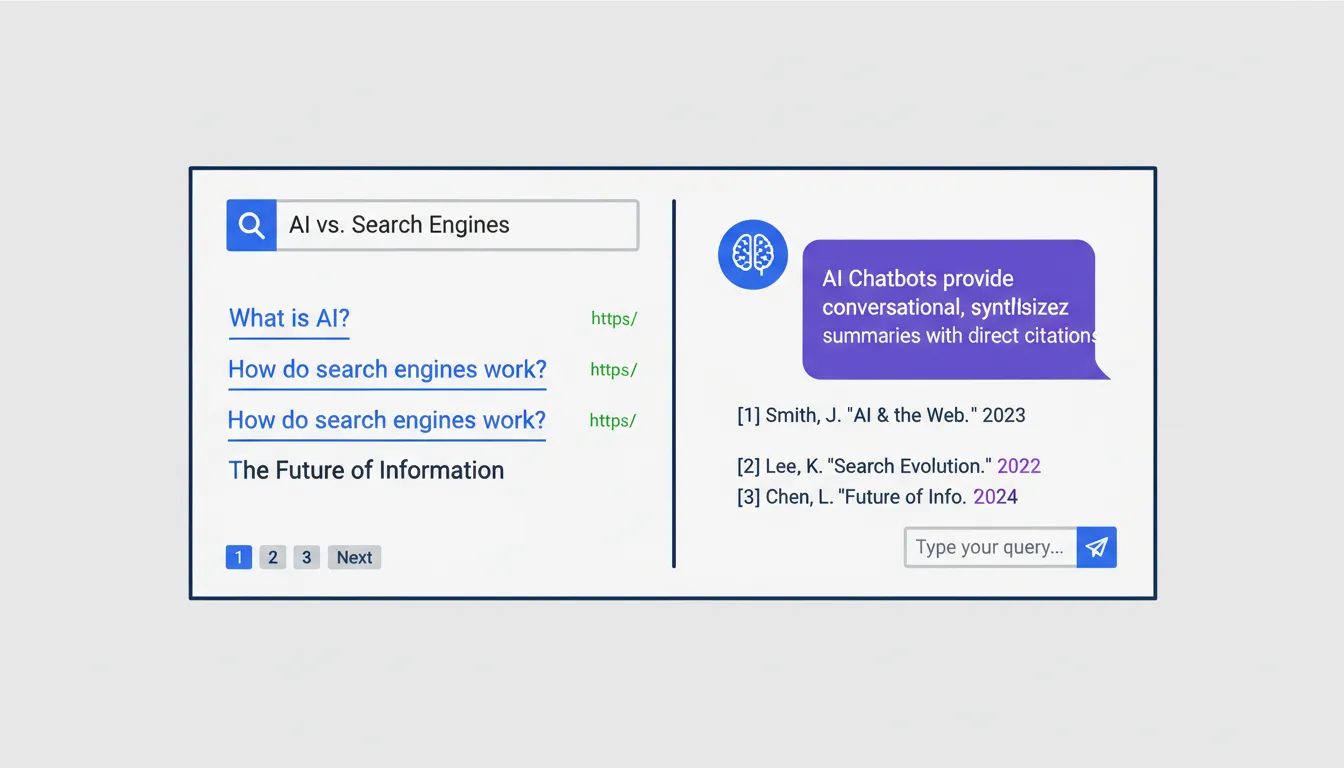
You spent three years building backlinks, obsessing over meta titles, and bribing Google with perfectly formatted sitemaps. Now ChatGPT is answering your customers' questions without mentioning you once. Welcome to the era of generative engine optimization — where the rules changed while you were still celebrating your page-one ranking.
How AI Engines Actually Find Your Content
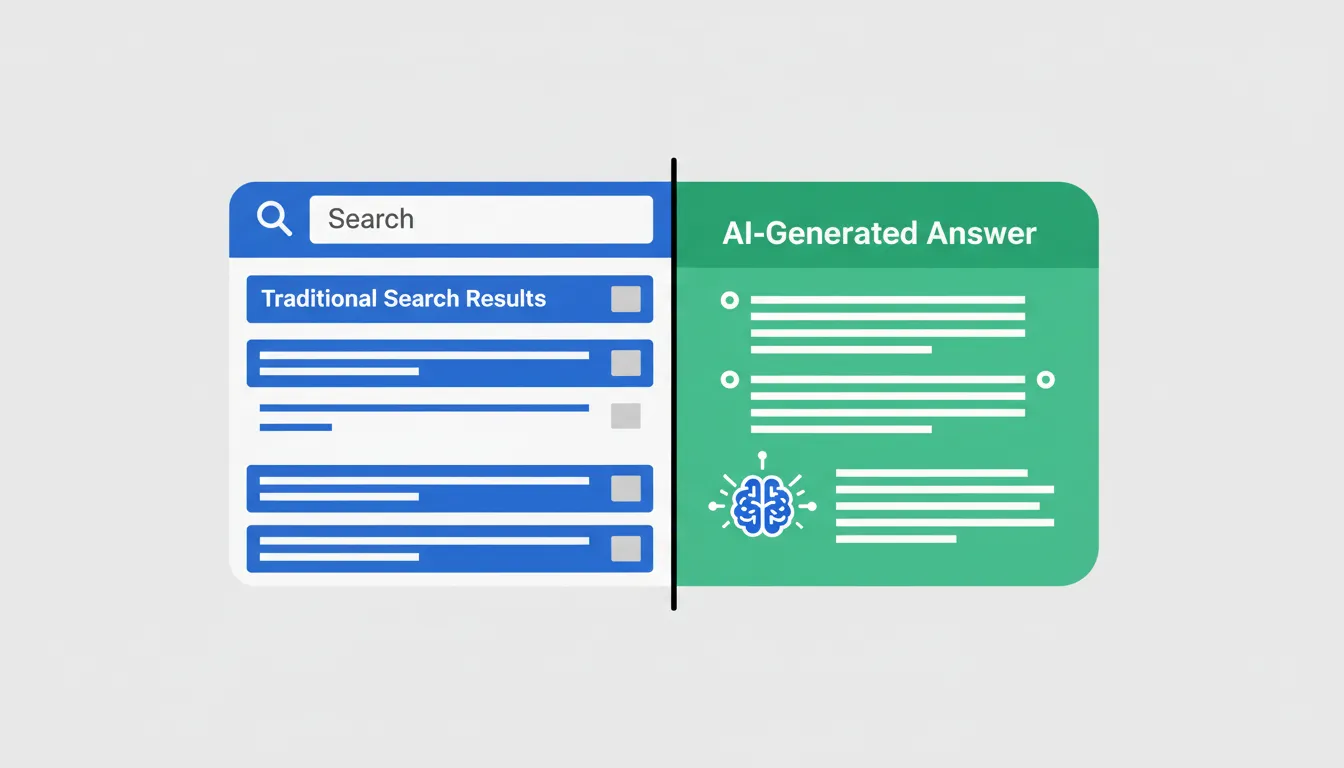
AI search tools like Perplexity, ChatGPT, and Gemini don't scroll Google like your aunt looking for a recipe. They use Retrieval-Augmented Generation (RAG): pulling relevant content from the web, synthesizing it, and spitting out a confident answer with citations.
Here's the sneaky part: one user question triggers query fan-out. Ask "best project management tool for freelancers" and the AI quietly fires off sub-queries like "top freelance productivity tools," "Notion vs Trello comparison," and "affordable PM software." If your content answers those sub-questions, you get cited. If not, your competitor does. Being a cited source is the new page one.
GEO vs. SEO: They're Not the Same Game
Traditional SEO chases keywords and backlinks. GEO chases citation frequency and share of voice inside AI-generated answers.
The content evaluation criteria are also different. According to Status Labs, AI search prioritizes content structure, factual accuracy, and quotable statements over traditional optimization methods like page speed scores or domain authority. Your perfectly optimized H1 tag means nothing if your actual content is vague mush.
GEO is also forecasted to become a key B2B marketing priority, per Maven Collective Marketing's 2026 forecast. The brands moving now have a first-mover advantage that's frankly embarrassing for everyone who waits.
The Practical GEO Playbook (No Developer Required)
Write for the "Clip"
AI engines scan your page looking for a clean, self-contained passage they can quote. Structure your content with a direct question followed immediately by a direct answer — no warm-up paragraphs, no "great question!" nonsense.
Before publishing any answer section, paste it into the Word & Character Counter to keep your direct-answer blocks tight. AI retrieval favors concise, authoritative passages, not 400-word preambles.
Use Original Data and Specific Examples
AI engines love citing unique statistics and original case studies because they can't get them anywhere else. If you surveyed 50 clients, publish the results. If you ran an experiment, share the numbers. Generic advice gets skipped; specific data gets cited.
Build Your Author Authority Page
Your "About" page isn't just for humans anymore. AI engines use it as an authority signal. List your credentials, years of experience, publications, and specific areas of expertise. Think of it as your LinkedIn profile, but for robots that decide whether you're worth quoting.
Format with Q&A Sections and Bullet Summaries
End every major article with a bulleted "Key Takeaways" block. Add an FAQ section. These formats are practically gift-wrapped for AI retrieval. Perplexity and Gemini especially love structured, scannable content they can clip without editing.
Don't Ignore Your Meta Foundation
While GEO focuses on content synthesis, AI engines still use metadata to understand what your page is about. A clean, accurate meta description helps establish page context before any content is even read. The Meta Tag Generator makes this fast and free, no SaaS subscription required.
How to Track If AI Is Citing You (Free Methods)
You don't need a $500/month tool. Start here:
- Manual brand queries: Ask ChatGPT, Claude, and Perplexity "What do you know about [your brand/website]?" directly. If they stare blankly, you have work to do.
- GA4 referral traffic: Check your referral sources for traffic from
perplexity.aiorchatgpt.com. These show up as direct AI-driven visits. - Structured data validation: Use Google's free Rich Results Test to confirm your schema markup is readable by crawlers that feed AI systems.
The Low-Effort Weekly Routine
GEO is genuinely less painful than traditional link-building, which required you to beg strangers on the internet for backlinks. Here's a 30-minute weekly habit:
- 10 min: Update one existing article with a cleaner direct-answer section
- 10 min: Add one original data point or real example to a top-performing page
- 10 min: Manually test your brand in two AI engines and note any changes
Winning in AI search is about niche authority, not domain size. A freelance copywriter who owns the topic "email sequences for SaaS onboarding" will out-cite a generic marketing blog every time.
The Bigger Picture
Traditional click-through rates are declining as AI answers more queries directly. The smart move isn't to panic; it's to capture zero-click visibility by becoming the source AI trusts. Before you invest heavily in either strategy, the ROI Calculator can help you compare the return between chasing traditional clicks and building citation-driven brand visibility.
Consistent, factual publishing wins the GEO long game. Publish things that are true, specific, and structured. That's it. No algorithm hacks, no link schemes, no crying.
Frequently Asked Questions
Q: What is Generative Engine Optimization and why should I care? GEO is the practice of optimizing your content to be cited inside AI-generated answers from tools like ChatGPT, Perplexity, and Google's AI Overviews. You should care because millions of users now get answers without ever clicking a search result, and if you're not the cited source, your competitor is.
Q: How does GEO differ from the SEO I already know? Traditional SEO targets ranked links, backlinks, and keyword density. GEO targets citation frequency, content structure, and factual accuracy inside synthesized AI answers. The audience is the same; the gatekeeper changed.
Q: What specific changes do I need to make to my website to show up in AI answers? Add direct-answer sections after every key question, include original data or statistics, build out your author authority page, and use Q&A formatting at the end of articles. These changes make your content easy for AI to retrieve and quote.
Q: Are there free tools to help me optimize for AI without signing up for a SaaS? Yes. Use the Word & Character Counter to tighten answer sections, the Meta Tag Generator for clean metadata, and Google's free Rich Results Test for structured data validation.
Q: How do I track if my site is being cited by generative engines?
Check GA4 for referral traffic from perplexity.ai, manually query your brand name in ChatGPT and Claude, and monitor whether AI tools describe your expertise accurately. It's low-tech, free, and surprisingly revealing.